Kernel-owned authority
Services and apps can request, never forge. Tickets, capabilities, approvals and leases are issued and checked by the kernel.
 OSAIKU
Pre-alpha
Experimental operating system · x86_64 UEFI
OSAIKU is a new operating system written from scratch. It is designed from the kernel up so that AI agents can understand the system and act in it through typed, bounded and human-approved actions, never by scraping your screen.
In active development. Not ready for everyday use or important data.
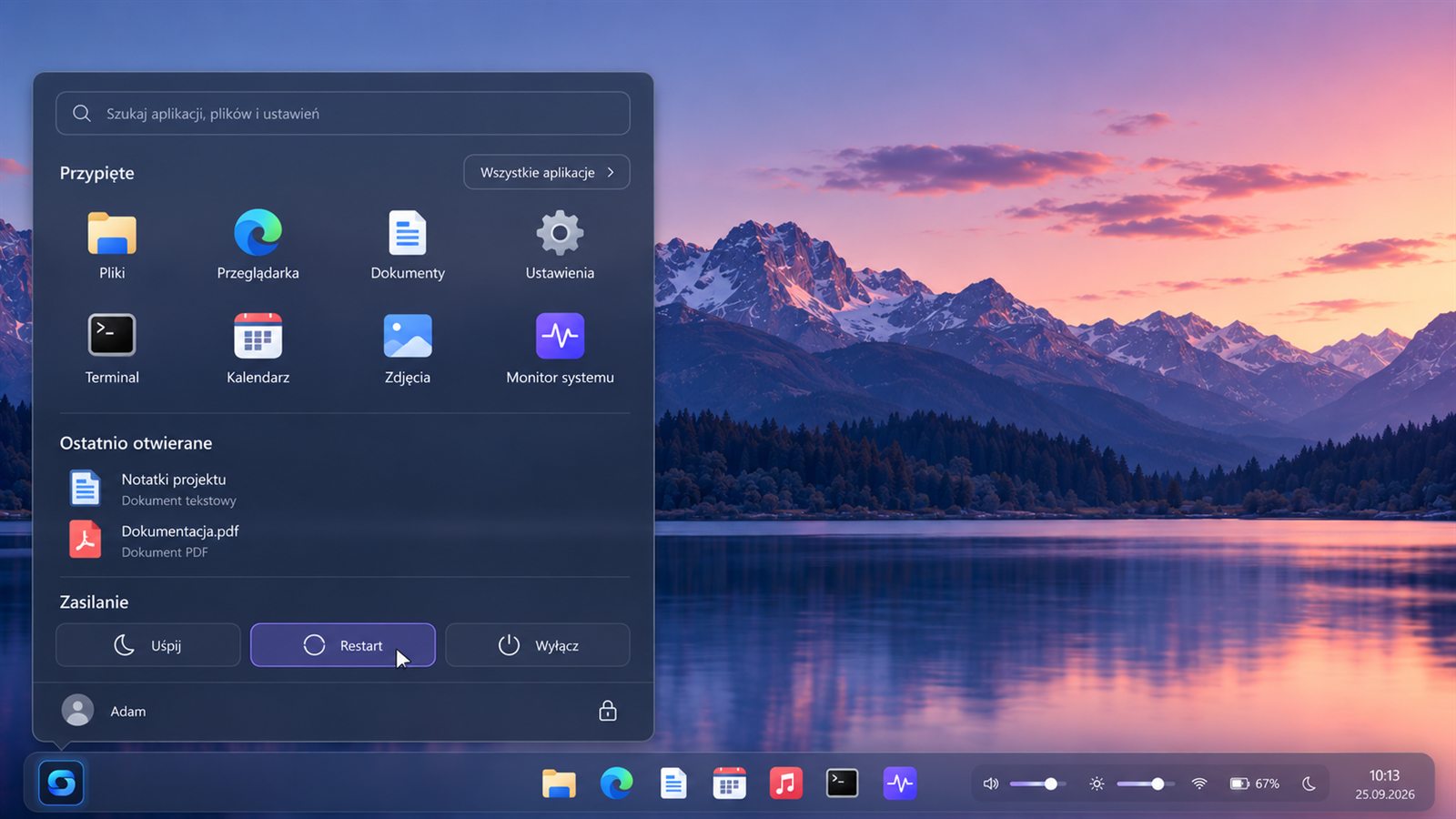
Figures from the project repository, October 2026.
01 — What is OSAIKU
Today's desktops were built for people and only later taught to put up with automation. OSAIKU starts from the opposite question: what would an operating system look like if a human and an AI agent were expected to work in it together from day one?
The answer so far is a small kernel that owns every grant of authority, services and apps that can only ask, and a desktop that describes itself to agents as structured, verifiable data. The human stays in charge. An agent can observe and propose, and it acts only inside a lease the person has approved.
The agent loop
02 — Principles
Services and apps can request, never forge. Tickets, capabilities, approvals and leases are issued and checked by the kernel.
Agents read the interface as stable records: roles, labels, state, bounds, hashes and provenance. No pixel scraping, framebuffer readback or OCR.
Every change ships with deterministic QEMU proofs, including absence proofs that state what a path does not do. Real hardware is tested on top, never instead.
Input and the desktop keep guaranteed priority. AI work runs asynchronously on bounded compute and never blocks the system you are using.
Models are meant to run on your own machine, on a device chosen for the task. Network access arrives only behind explicit policy and containment.
Storage is authenticated and copy-on-write. Signed updates boot as a trial first and fall back to the previous system on failure.
03 — Where it stands
OSAIKU already boots on real hardware and runs its own desktop and apps. The current stage is about making storage durable, updates safe and the system multicore, which are the prerequisites for running a local AI model inside it.
04 — Roadmap
Trusted UEFI boot, a fixed service core, secure assistant actions, a preemptive scheduler, storage trust, AI-friendly filesystem metadata and the first local AI runtime skeleton.
An app execution boundary, controlled app capsules and launch, physical bring-up on real laptops, hardware observability, and display and input foundations.
Interaction design, prompt and assistant surfaces, semantic screen observability, typed UI action planning, diagnostic boot, modern input and approved action leases.
The first document app with a privacy contract, then a functional desktop with its own compositor and multiple windows and processes.
Authenticated storage, files and a file manager, a full-disk install, signed updates with fallback and a multicore foundation.
Local LLM runtime and AI agent integration
Agent memory, retrieval and context compression
Networking, browser containment and VMs
OSAIKU SDK and native app portability
Security review and hardening
Human-friendly desktop polish
Broader hardware support
05 — The look
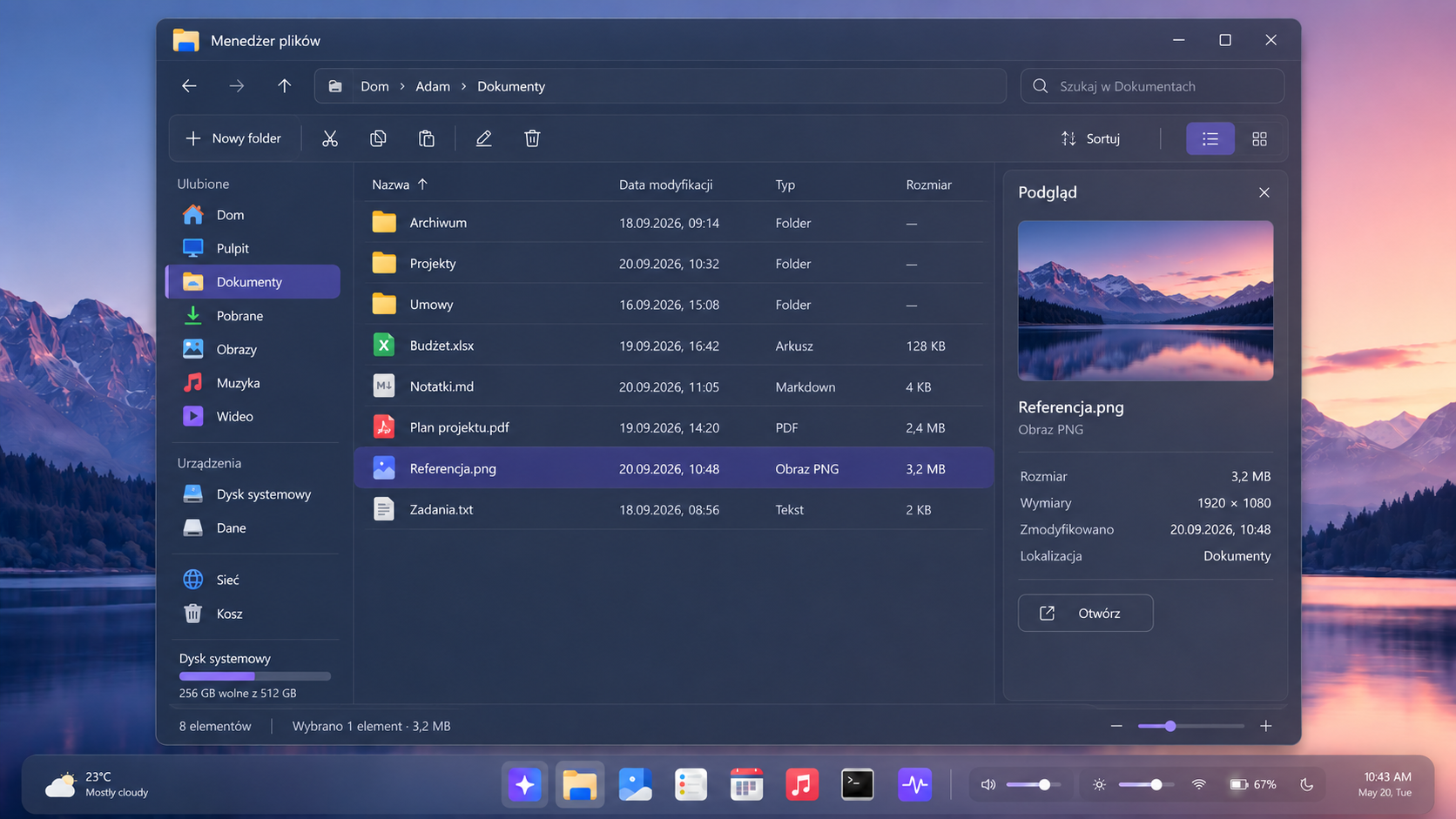
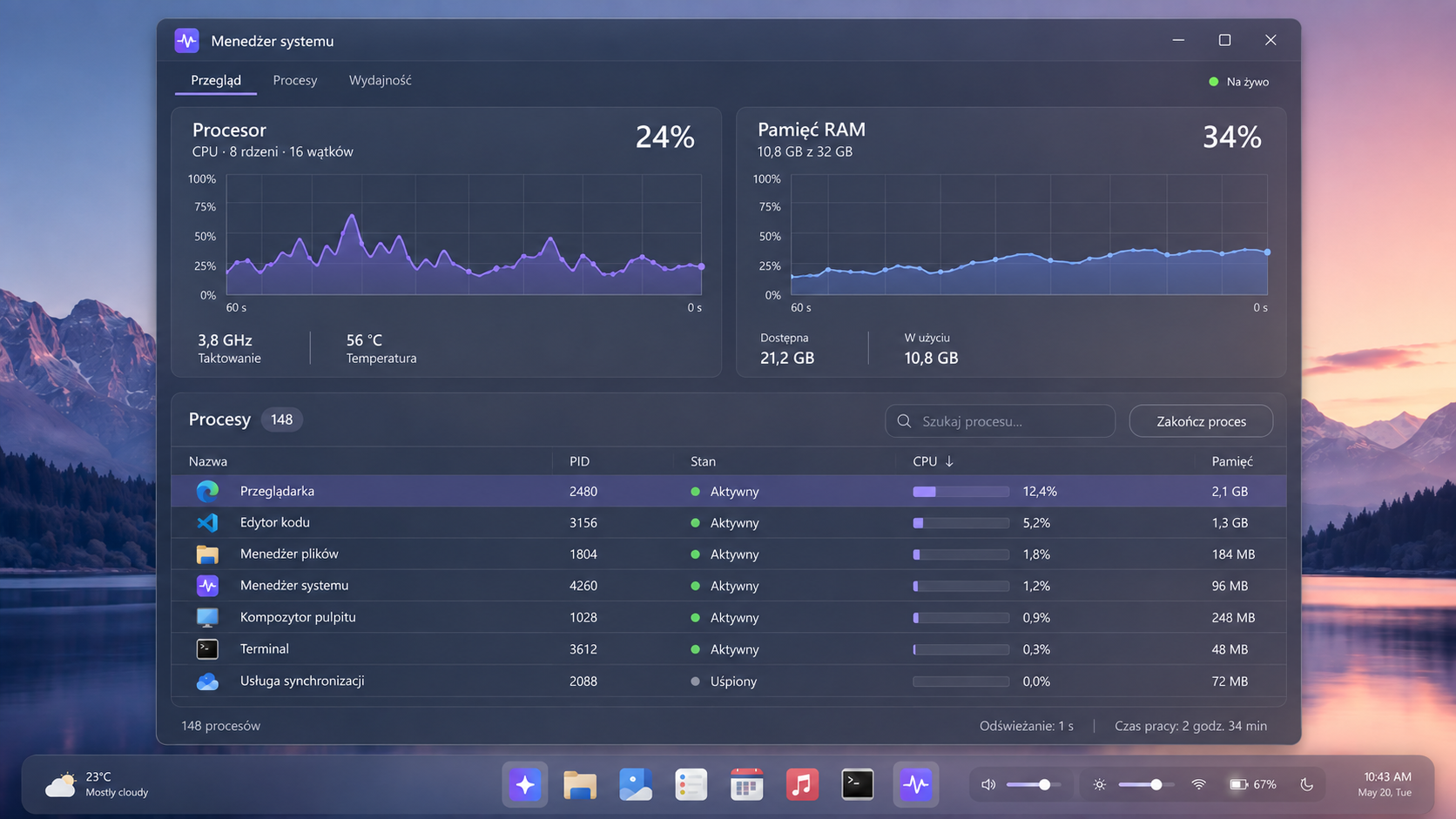
These design references set the direction for the desktop. The native compositor already follows their palette and window style. Several apps shown here, such as the browser, calendar and music player, are still on the roadmap.